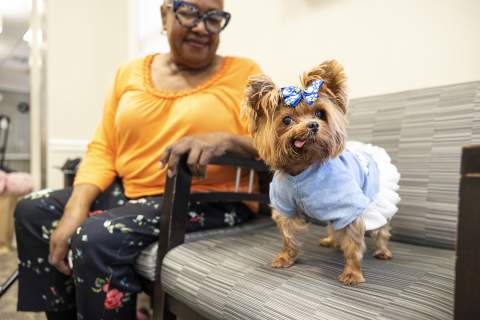


Today, 36% of Americans are financially fragile. They have fewer assets, more debt and lack financial literacy, and a $400 veterinary bill would land them into immediate debt. The PetSmart Charities-Gallup State of Pet Care survey in 2025 revealed that more than 50% of pet parents have skipped or declined necessary care and 70% of those say it’s due to financial concerns. Then, problems can only worsen and become more expensive, many times leading to heartbreaking decisions that are difficult for pets, people and veterinary teams.
Along with the financial and emotional struggle of pet parents, veterinarians are navigating their own complex realities as well. These include rising costs, evolving market pressures, and the responsibility of sustaining their practices. These experiences underscore a deeper, shared challenge across the entire profession, pointing to a need for thoughtful, collaborative solutions. Otherwise, there is a risk that caring for pets will only become an option for the privileged; and that would be of no benefit to pets, people or communities. The widening gap in access to veterinary care remains one of the most pressing challenges facing both pet families and the professionals who serve them. While the veterinary field continues to advance clinical excellence, many pet owners struggle to obtain even basic care. It’s why PetSmart Charities committed $100 million to support programs building solutions to improve accessibility. Part of this investment includes preparing the next generation of veterinary students dedicated to community medicine. Practitioners in this space practice more flexible care options at lower costs that may include mobile clinics and other means of bringing care directly where needed.
Evolving the “Gold Standard” Approach and Equipping Veterinary Students
Traditionally, veterinary education has emphasized a “Gold Standard” approach to care that prioritizes optimal clinical outcomes. While everyone wants the best care for their pets, this model does not always reflect the diverse realities veterinarians encounter in practice. Many new graduates are exceptionally well-trained medically yet feel underprepared for the nuanced conversations and decision-making required in community medicine settings. It’s why we support a “Spectrum of Care” approach. This encourages students and practitioners to tailor recommendations to better meet the needs of pet parents, rather than only considering the most technologically advanced level of care.
To help bridge this gap, PetSmart Charities launched the Veterinary Fellowship Program—an evolution of our previous scholarship efforts designed to create more sustained, meaningful impact. While scholarships help alleviate the cost of education, they do not fully address the need for practical training, mentorship, and career preparation. This fellowship model takes a more comprehensive approach by investing in both the financial and professional development of future veterinarians.
Investing in Mentorship and Long-Term Career Growth
Starting in a student’s third year (or equivalent), the program continues through graduation and into practice, bridging the gap between veterinary education and the transition to clinical practice. These opportunities are intentionally structured to close the gap between traditional training and the realities of practice, equipping students with the knowledge, perspective, and confidence to thrive in community-based care.
The fellowship launched in partnership with five universities—Colorado State University, Cornell University, The University of Arizona, The University of California, Davis, and The University of Minnesota—each recognized for their commitment to expanding access to care.
Through this experience, fellows develop:
• Practical communication skills to navigate real-world client conversations with empathy and clarity
• Training in Spectrum of Care approaches that align medical options with client circumstances
• Leadership and decision-making capabilities that support long-term career growth
• A strong sense of professional community and belonging
Building a Supportive and Sustainable Community Veterinary Workforce
By investing in veterinarians at this pivotal stage, the program also aims to strengthen the broader workforce. Community medicine clinics often face staffing shortages, and new graduates may feel hesitant to enter these roles without adequate preparation. By building confidence, fostering community, and supporting long-term career pathways, this fellowship helps create a more sustainable pipeline of veterinarians ready to serve diverse populations.
Addressing access to care will require more than clinical excellence alone. It requires rethinking how we prepare, support, and retain veterinarians across the profession. By aligning education, financial support, and real-world training, we can help ensure that more veterinarians are ready to meet the needs of today’s pet families—and that more pets receive the care they deserve.
Robyn Jaynes, DVM is the Director of Veterinary Affairs at PetSmart Charities; each out to her via LinkedIn.
If you’d like to contribute and support programs like these, visit petsmartcharities.org/donate.